DKIM X-ray
Get instant visibility into every DKIM selector signing for your domain. Check key strength, spot missing or revoked records, and clean up unused keys with confidence.
Analyze DKIM Keys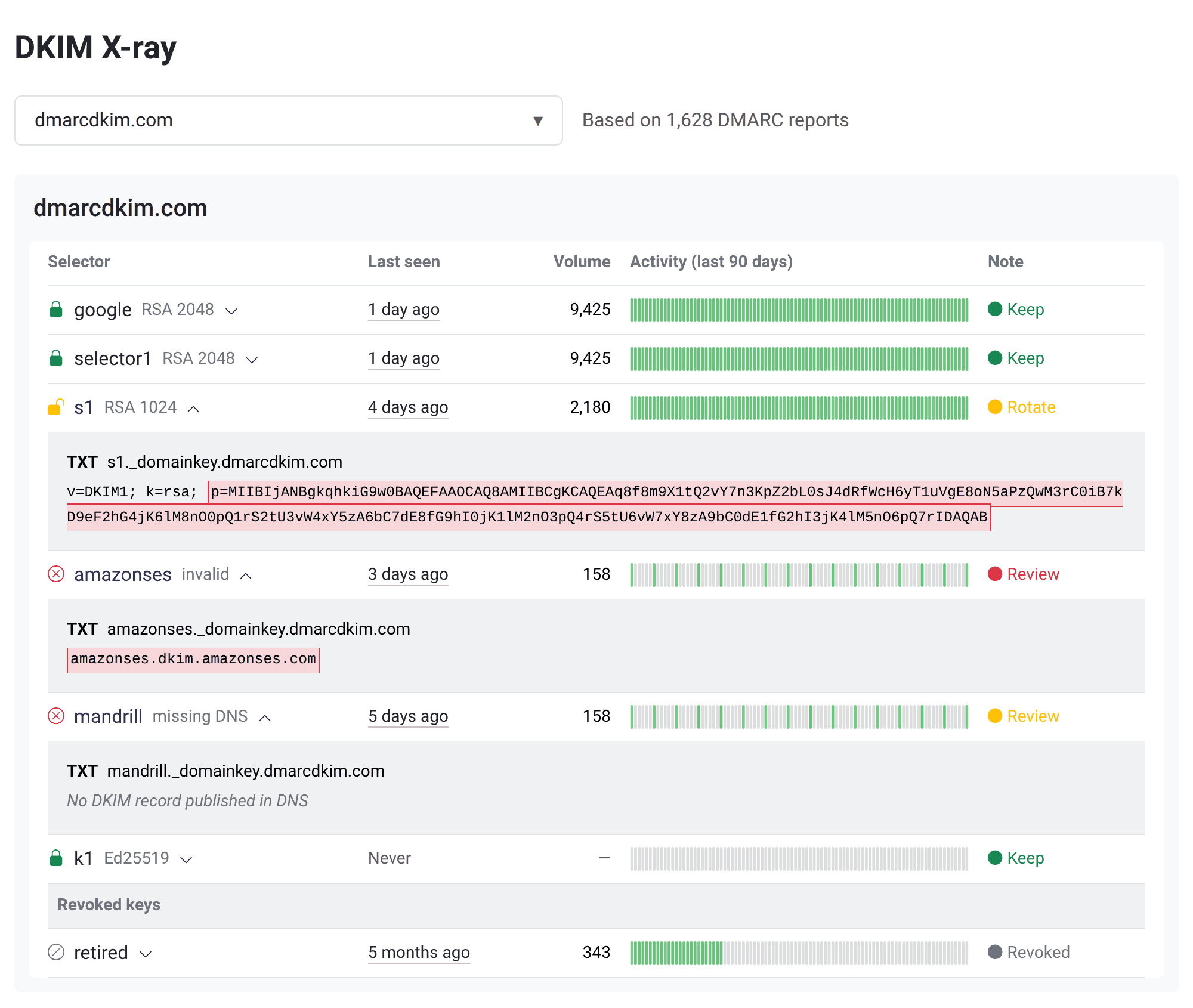
Real Email Signing X-ray
DKIM X-ray goes beyond a one-off record lookup. It correlates your DKIM selectors with actual signing activity from DMARC aggregate reports, showing you exactly which keys are in use, which are stale, and which are missing from DNS.
90-Day Activity Heatmap
Every selector is mapped against 90 days of real signing data from DMARC reports. A visual heatmap shows daily email volume per selector so you see at a glance what is active and what is stale.
Complete Selector Inventory
DKIM X-ray combines selectors observed in DMARC reports with selectors found in your DNS history, covering your domain and all subdomains in one unified view, including CNAME-delegated keys.
Data-Driven Recommendations
Based on real signing patterns and key health, each selector receives an actionable recommendation to keep, review, rotate, revoke, or remove it. Backed by actual data, not guesswork.
The Real Impact for You
DKIM X-ray isn't just diagnostics. It protects your brand reputation, keeps signatures verifiable, and gives your ops team back control and time.
Deliverability You Can Trust
Verified DKIM signatures keep your legitimate mail in your customers inbox, no silent signing failures.
Time Back to Your Team
Stop hunting selectors across providers and DNS zones. Get instant actionables backed by data.
Stronger Domain Security
Weak, revoked, or forgotten keys are flagged before attackers or auditors find them.
Built for Key Rotation
See exactly when old selectors stop signing so you can revoke retired keys safely.
Deep DKIM Analysis
Comprehensive selector analysis that goes beyond a single record check
Identify weak keys, testing mode, revoked keys, and DNS issues
All selectors of your domain and its subdomains in one view
Every selector is resolved live in DNS, following CNAME delegation chains, and its public key is parsed and analyzed for weaknesses.
- Key type and length (RSA, Ed25519), flagging weak or deprecated keys
- Revoked keys, testing mode (t=y), and multiple records at one selector
- CNAME targets and selectors signing without a published DNS record
Each finding links to the impacted emails in your DMARC reports, so you can judge the real-world effect before making changes.
We correlate DMARC aggregate reports with your DKIM selectors. If a published key hasn't signed any email for 90 days, we mark it as unused and recommend revoking it.
Result: a lean, auditable DKIM setup with strong keys, no forgotten selectors, and a clear rotation trail.
Sign up with your domain to collect DMARC reports and x-ray your DKIM keys.
Get first results on your DKIM key health & fix weak or broken selectors
Use our monitoring and we tell you which keys are unused and can be safely revoked
Why DKIM Key Hygiene Matters
DKIM only protects your domain when keys are strong, published correctly, and retired once unused. Most domains accumulate forgotten selectors over the years, and each one is a liability.
Weak keys get cracked
RSA keys below 1024 bits can be broken, and 1024-bit keys are deprecated. Modern setups sign with 2048-bit keys.
Forgotten selectors
Old vendor keys stay published long after a tool is gone, so whoever still holds the private key can sign as your domain.
Rotation best practice
Rotate keys regularly and revoke retired selectors by publishing an empty public key, so old signatures can't be reused.
Bottom line: DKIM X-ray shows which keys are actually signing, so you can rotate and revoke based on data, not hope.
DKIM Questions & Answers
Check your DMARC Setup
DKIM is an integral part of the DMARC framework which ensures that no one can send emails in your name and your emails reach your customers inbox
DmarcDkim.com trusted by 2000+ companies